


Content marketing is a cost-effective way for SaaS companies to educate customers, build trust, and drive growth. Instead of direct sales pitches, it focuses on solving problems and showcasing how software solutions can improve workflows. Here’s why and how SaaS businesses should approach content marketing:
- Why It Matters: SaaS products often have long sales cycles and complex features. Content helps explain benefits, reduce churn, and nurture leads over time. It’s also 62% cheaper than traditional marketing and generates 3x more leads.
- SEO’s Role: Optimized content ensures visibility in search engines, attracting prospects early in their journey and delivering long-term results.
- Key Strategies: Define your audience, set measurable goals, and create a content calendar. Focus on blogs, case studies, whitepapers, and videos tailored to each stage of the buyer’s journey.
- Measuring Success: Track metrics like Customer Acquisition Cost (CAC), Lifetime Value (LTV), and marketing-sourced revenue. Use tools like HubSpot and Ahrefs for better content management and SEO insights.
Content marketing, when done right, positions your SaaS brand as a trusted resource, driving both customer acquisition and retention.
Content Marketing for SaaS: The 9-Step Guide
Building Your SaaS Content Marketing Strategy
Creating a solid content marketing strategy for SaaS requires a clear understanding of your goals and a deep connection with your audience’s needs. The key is to focus on who your audience is and how your product solves their specific challenges.
"Marketing success in software-as-a-service (SaaS) requires targeting the right audience. By understanding audience pain points, preferences, and behaviors, SaaS companies can tailor their offerings and communications." – Marina Turea, Content Project Manager, Digital Authority Partners
Identifying Your Target Audience and Their Problems
Getting to know your target audience involves more than just looking at basic demographics. You need to dig into their challenges, habits, and preferences to create content that truly speaks to them.
Start by clearly defining your SaaS product’s purpose and the problems it solves. How does it simplify your customers’ lives or improve their businesses? This clarity will shape every piece of content you create.
Market research is essential for identifying your audience. Look at industry trends, find untapped niches, and study competitors. Many successful SaaS companies thrive by focusing on specific market needs, like improving collaboration or boosting business efficiency.
Your existing customer data is a goldmine of information. Dive into analytics to uncover patterns in user behavior, pain points, and content preferences. Tools that track user interactions can reveal which features customers love and where they face challenges.
Build detailed buyer personas to capture your audience’s key traits. Go beyond basic info – include their goals, challenges, communication preferences, and decision-making processes. For B2B SaaS, remember that purchasing decisions often involve multiple stakeholders, so you may need personas for different roles within an organization.
Engage directly with your customers to gather insights. Interviews, surveys, and social media monitoring can uncover recurring themes and the language your audience uses to describe their problems. Pay attention to online discussions and communities where your audience spends time.
Don’t overlook your internal teams as sources of valuable customer insights. Sales teams hear objections and questions firsthand, while customer support teams know the most common issues users face. Product development teams can highlight the features customers request most often. Regular communication between these teams and marketing ensures your content addresses real-world needs.
Once you’ve built a clear audience profile, you can move on to setting measurable goals that drive meaningful results.
Setting Goals and KPIs That Matter
Successful content marketing starts with clear, measurable goals. Focus on metrics that tie directly to revenue and long-term growth.
"We don’t want to be chasing vanity metrics that will be of little or no use to us further down the line. We want to focus on improving our products, lifting our acquisition and retention, and ultimately our bottom-line ROI."
Your content goals should align with different stages of the customer journey and broader business objectives. One of the most critical metrics to track is marketing-sourced revenue. As Adam Goyette, VP of Marketing at Help Scout, explains:
"For me, the most obvious marketing metric to track is marketing sourced revenue. How much money are your marketing efforts actually making for the company?"
For SaaS, it’s also essential to monitor customer acquisition costs (CAC) and lifetime value (LTV). Content marketing can help reduce CAC by creating evergreen SEO content that continues to attract leads over time. Measure how your content impacts CAC while maintaining lead quality.
Activation rates – how engaged users are after signing up – can be even more telling than raw signup numbers. Track the conversion rate from signup to paid user over 12 months to better gauge your marketing ROI.
| Content Marketing KPI Category | Key Metrics | Business Impact |
|---|---|---|
| Engagement | Organic traffic, time on page, click-through rate, bounce rate | Reflects content quality and audience interest |
| Brand Awareness | Search rankings, backlinks, social shares, brand mentions | Strengthens market presence and authority |
| Conversions | Lead generation, conversion rate, CAC, LTV | Directly drives revenue and growth |
Set realistic, actionable targets for each KPI. Use tools to visualize data, making it easier for stakeholders to understand and act on the insights.
A consistent production schedule is the next step to bring these strategies to life.
Creating Content Calendars and Workflows
A content calendar keeps your team on track and ensures your content aligns with business goals. It helps organize efforts and takes advantage of seasonal trends.
Your calendar should include key details: deadlines, content topics, assigned team members, progress status, and supporting materials. Depending on your team’s size, you can use simple tools like Google Sheets or more advanced platforms like Asana or Airtable.
Strike a balance in your content mix. Allocate:
- 60% to educational content that builds trust and showcases expertise.
- 20% to promotional content that highlights your product’s benefits.
- 20% to interactive content that fosters engagement and community building.
Tailor content to each stage of the buyer journey. For awareness, focus on broad industry challenges. For consideration, dive into specific solutions. For evaluation, provide detailed comparisons, case studies, and guides to help prospects make decisions.
Develop a structured workflow to maintain quality and consistency. This typically involves keyword research, competitor analysis, creating briefs, writing content, reviews, and publishing. Assign tasks based on team members’ strengths.
"The beauty of SEO is that, instead of pushing a marketing message onto folks who don’t want to hear what you have to say, you can reverse-engineer the process to discover exactly what people are looking for." – Cyrus Shepard
Plan content themes around your product’s benefits throughout the year. For instance, if your SaaS tool focuses on project management, create content about productivity during busy seasons. If you offer financial software, publish tax-related content before filing deadlines.
Balance evergreen content that provides lasting value with timely content that addresses current trends. This approach supports your SEO goals while keeping your content relevant.
To keep your calendar effective, review performance data regularly. Monthly evaluations will show which topics and formats perform best, helping you adjust your strategy to meet your audience’s evolving needs. This ensures your content remains impactful and aligned with your goals.
Best Content Types for SaaS Companies
These content formats tackle the diverse challenges SaaS companies face, ensuring your message resonates with prospects at every stage of their journey. Research shows that 76% of B2B buyers prefer content tailored to their specific stage in the decision-making process. This makes it crucial to diversify your content strategy.
On average, buyers consume 13 pieces of content before making a purchase. These touchpoints guide them from initial awareness to final conversion. Each content type plays a unique role in building trust, showcasing value, and driving revenue. Let’s dive into the most effective content formats for SaaS companies.
Blog Posts That Educate and Generate Leads
Blog posts are the cornerstone of many SaaS content strategies. They help establish expertise, drive organic traffic through SEO, and deliver ongoing value to your audience. Companies with active blogs generate 67% more leads than those without.
Successful SaaS blogs address specific challenges their audience faces. This approach helps capture prospects early in their journey, often through search engine results. For instance, one leading SaaS company has strategically grown its blog to attract nearly five million organic visits monthly. Their content focuses on practical topics like automation workflows, productivity tips, and integration tutorials – showcasing their platform’s capabilities naturally, without being overly promotional.
Hannah Martins, SEO Specialist at The SEO Kitchen, emphasizes the importance of a thoughtful blogging approach:
"Businesses that want to start driving more leads with their blog need to come up with an effective content strategy that targets the search terms their audience is already searching for. These businesses need to create quality content that helps their users – not a watered-down post to reach a word count. Make the best blog post you can, targeting the search phrase you want to rank for and rinse and repeat, and that’s how you drive traffic and leads with something as simple as a blog."
To maximize impact, include clear calls-to-action (CTAs) like “Sign Up for a Trial” or “Book a Demo” in your posts. However, the primary focus should remain on delivering genuine value. Educational content that solves problems builds trust and positions your company as a helpful resource, not just another vendor.
Tailor your blog content to different stages of the buyer’s journey. For example:
- Awareness stage: How-to guides and industry insights.
- Consideration stage: Feature comparisons and implementation tips.
Case Studies That Build Credibility
Case studies are a powerful way to build credibility. They highlight real customer success stories, bridging the gap between your product’s promises and proven results. This makes them particularly effective for SaaS companies with longer sales cycles.
The most compelling case studies follow a clear structure: the challenge faced by the customer, the solution provided, and the measurable results achieved. Focus on specific metrics like efficiency improvements, cost savings, or revenue growth. These tangible outcomes help prospects envision similar benefits for their own businesses.
Case studies are especially impactful during the purchase stage, when buyers need reassurance to make a final decision. They serve as social proof, demonstrating your product’s effectiveness in real-world scenarios.
For the best results, involve multiple stakeholders from your customer’s organization. Quotes from both end-users and decision-makers provide a well-rounded perspective on the value of your solution. Video case studies can be even more engaging than written ones. Seeing and hearing real customers share their experiences creates an emotional connection that text alone can’t achieve. These videos are versatile and work well on landing pages, in sales pitches, and on social media.
Whitepapers and Videos for Deeper Engagement
Beyond blogs and case studies, whitepapers and videos are excellent tools for deeper engagement. Whitepapers offer detailed insights, while videos are perfect for presenting complex ideas in an accessible way.
Introductory eBooks or whitepapers are great for the awareness stage, while more advanced versions cater to prospects in the consideration phase. These formats allow you to showcase expertise by diving into industry trends, research findings, or comprehensive guides. Whitepapers often work well as gated content, requiring prospects to share their contact information in exchange for valuable insights.
Videos, on the other hand, are ideal for product demos, tutorials, and customer testimonials. They’re versatile and can be used across multiple stages of the buyer journey. For example:
- Awareness stage: Thought leadership videos to build brand recognition.
- Consideration stage: Detailed product walkthroughs or feature highlights.
Webinars combine the strengths of whitepapers and videos, offering in-depth content with visual engagement. They’re particularly effective for prospects in the consideration stage who want a detailed understanding of your solution before committing.
To make these formats successful, ensure they provide value beyond what’s available in your regular blog content. Exclusive insights, thorough research, or detailed tutorials justify the additional time investment from your audience. You can also repurpose content across formats – for example, turning a whitepaper into a webinar series, a blog series, or even an infographic collection.
sbb-itb-d46ea71
Tools for Content Optimization and Tracking
The right tools can transform content from mere words on a page into measurable results. When data is scattered and systems don’t communicate, time and resources are wasted. SaaS companies thrive with platforms that streamline content creation, track performance in detail, and integrate effortlessly with existing workflows. Here’s a look at some tools that can elevate SaaS content strategies.
Using HubSpot for Content Management
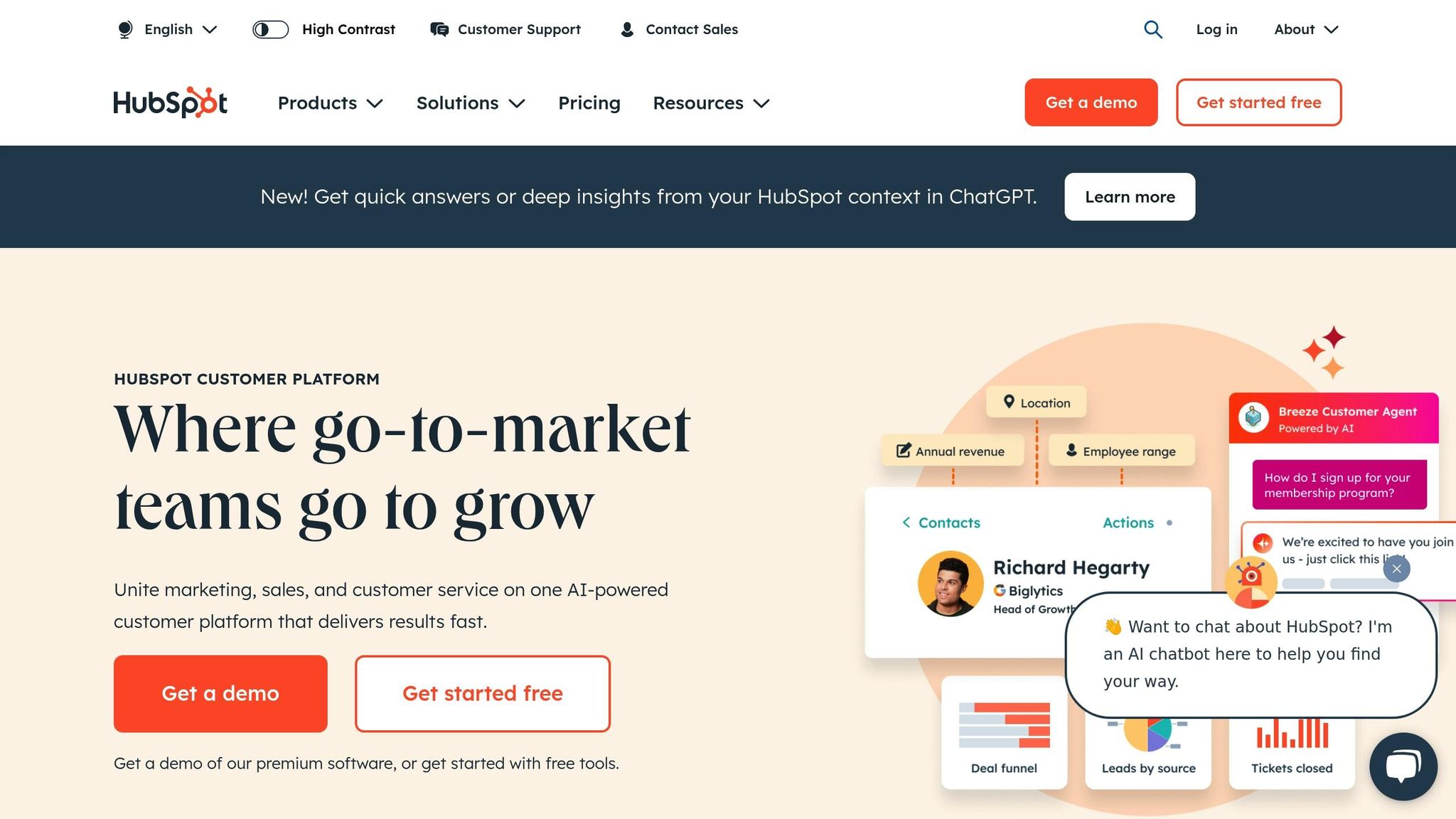
HubSpot’s Content Hub is an AI-powered CMS designed to help businesses manage content efficiently at scale. With its drag-and-drop editor, creating pages becomes straightforward, and its integration with HubSpot CRM ensures that your content efforts directly tie into sales performance.
What makes HubSpot stand out is its all-in-one platform. Teams across marketing, sales, and customer service can collaborate seamlessly, gaining a unified view of the customer journey. Automation tools within HubSpot allow you to set up workflows for lead nurturing, personalized follow-ups, and sales alerts triggered by content engagement.
The results speak for themselves. Over 12 months, technology companies using HubSpot reported a 115% rise in inbound leads, a 67% increase in deals closed, and 13% revenue growth. Zapier’s success with HubSpot is a prime example. Giancarlo Lionetti, Chief Revenue Officer at Zapier, shared:
"We’re able to create a cohesive customer experience across marketing, sales, and customer success engagements with HubSpot, making it easy to launch and validate new programs quickly. As Zapier continues to grow, we love how we’ve been able to scale our setup to match our changing needs."
For SaaS companies just starting out, HubSpot’s Content Hub offers a free option. Before diving into custom-built solutions, their plugin library provides pre-made tools to address common SaaS marketing challenges.
Now, let’s shift focus to a tool tailored for SEO and keyword insights.
Ahrefs for SEO and Keyword Research
Ahrefs is a go-to platform for SaaS companies looking to sharpen their SEO strategies. Its Keywords Explorer tool doesn’t just show search volume – it also provides a Traffic Potential metric, estimating the organic traffic top-ranking pages receive. This gives a clearer picture of what ranking improvements could deliver.
Ahrefs also helps you decode search intent through the "three Cs" – content type, format, and angle – ensuring your content aligns with what users are looking for. Its Site Explorer feature identifies organic competitors, helping you uncover gaps in your strategy and better understand the competitive landscape.
For technical SEO, Ahrefs’ Site Audit tool detects issues that might be holding your content back. Features like backlink analysis and Brand Radar provide insights into competitor strategies and track brand mentions, giving you an edge. One case study showed a 72% increase in organic traffic to a set of articles, highlighting the platform’s impact.
Young Nomads‘ Content Optimization Services
Young Nomads specializes in crafting data-driven strategies that help SaaS companies achieve measurable business outcomes. Based in Indore, India, the team understands the unique hurdles SaaS businesses face, such as long sales cycles and complex buyer journeys.
Their approach combines multiple disciplines – SEO, content marketing, technical optimization, and conversion rate optimization – into a unified strategy. Rather than optimizing content in isolation, they ensure every piece contributes to broader goals like pipeline growth and revenue generation.
Young Nomads offers three service tiers to suit different business needs:
- Basic SEO Plan: Covers content marketing, on-page SEO, and basic technical SEO, ideal for startups and smaller SaaS businesses.
- Advanced SEO Plan: Includes comprehensive off-page SEO and advanced technical optimizations, designed for growing companies.
- Enterprise SEO Plan: Provides tailored strategies, advanced analytics, and dedicated consultation for larger SaaS firms with complex requirements.
They also address technical SEO challenges such as improving site speed and implementing schema markup, ensuring search engines can easily discover and index your content. For SaaS companies aiming to scale, Young Nomads offers the strategic guidance and hands-on execution needed to build sustainable growth systems. Every decision is backed by performance metrics and a focus on business impact.
Together, these tools and services create a system that supports every stage of your content marketing strategy, from creation to optimization and beyond.
Measuring ROI and Improving Performance
Once you’ve built a solid content strategy, it’s time to focus on measuring ROI to understand how each piece of content contributes to your business goals. Content marketing needs to tie directly to revenue, retention, and growth. These metrics are the bridge connecting your content efforts to tangible business outcomes.
Key Metrics to Track
For SaaS companies, tracking the right metrics is essential due to the unique challenges they face throughout the customer journey. One critical metric is Customer Acquisition Cost (CAC), which has increased by 55% over the past five years. To ensure profitability, aim for a Customer Lifetime Value (CLTV) to CAC ratio of 3:1.
Revenue metrics should take center stage. By tracking marketing-sourced revenue, you can directly link your content efforts to sales performance. However, don’t overlook retention metrics – these are just as crucial. A 5% increase in customer retention can boost profits by 25-95%. Holly Chen, Global Head of Digital Marketing at Slack, highlights the importance of retention:
"Companies should be laser-focused on retention: revenue retention as well as user retention. Revenue retention shows expansion or contraction of the business. User retention is an early indicator of the user’s health and engagement with the product. For freemium users, it indicates the likelihood of upgrading to paid plans. For paid users, it indicates possible churn or expansion."
To get a complete picture, track metrics across all stages of the customer journey:
- Awareness: Impressions, page views
- Consideration: Time on site, lead rate
- Conversion: MQLs (Marketing Qualified Leads), SALs (Sales Accepted Leads)
- Purchase: Closed deals, upsells
- Loyalty: Referrals, renewals
Connecting Content Performance to Business Results
To see how content marketing drives growth, you need clear attribution methods that connect your activities to outcomes. SaaS companies leveraging content marketing often see 30% higher growth and a 5-10% improvement in retention. However, drawing these connections requires careful planning.
Julia Borgini, Founder of Spacebarpress Media, explains why ROI tracking is critical:
"Marketing ROI is important for SaaS companies because they need to be able to compare their marketing spend to business results. They need to see the effects of their marketing efforts on their bottom line. Most SaaS companies are, at least at the start, operating on razor-thin margins, so every dollar counts. And since marketing results are often long-term, it’s essential to know what they’re affecting and how they align or map to overall business results."
By using content attribution, you can map the customer journey from first interaction to conversion. This helps identify which channels, campaigns, and content pieces are driving the most revenue. Setting measurable goals with the OKR (Objectives & Key Results) framework ensures you can track progress and prove ROI.
Cohort analysis is another valuable tool. It shows how long it takes for leads to convert into paying customers, helping you understand which content investments yield real results. Building sustainable content – like evergreen SEO pieces – can also reduce reliance on short-term paid campaigns. SEO-driven content not only establishes long-term authority but also generates more leads at a fraction of the cost of traditional methods.
Using Data to Improve Your Strategy
Defining metrics is just the beginning. The real magic happens when you use data to refine your approach. Regular reviews and A/B testing allow you to adjust your strategy and improve ROI over time. Data gives marketers the insights needed to make decisions that prioritize customers and revenue.
Start by analyzing customer behavior. Look at metrics like user engagement, feature usage, and churn rate. Tools like Google Analytics, email analytics, and heatmaps can help you gather this data. These insights enable you to tailor campaigns to meet your audience’s needs.
Next, dive into content performance analysis. Track engagement metrics (likes, shares, comments), conversion rates, and SEO performance. Use analytics tools to see how your content drives actions like sign-ups or sales. SEO tools can also help you identify top keywords and craft content that answers common questions in your industry.
Audience segmentation is another effective way to refine your strategy. By grouping your audience based on behavior or preferences, you can create content that resonates with specific segments. Seasonal trends and behavioral data can guide you in timing your content for maximum impact.
Predictive and cohort analytics can also help you track engagement and forecast trends. Use this data to identify at-risk customers by analyzing their behavior, engagement, and support interactions. This proactive approach allows you to address potential issues before they lead to churn.
Integrating your CRM with marketing tools can streamline operations and improve efficiency. Data visualization tools, like dashboards, transform raw numbers into actionable insights, making it easier to spot trends and make informed decisions. But remember, having the tools isn’t enough – you need to foster a data-driven mindset throughout your organization.
Even small improvements can have a big impact. For example, a 5% increase in retention can lead to a profit boost of up to 95%. The SaaS industry is always evolving, so it’s essential to keep refining your strategy based on the latest analytics.
Conclusion
Content marketing plays a crucial role in driving success for SaaS companies. By focusing on acquiring, educating, converting, and retaining customers, it becomes a powerful tool for measurable business growth.
In fact, content marketing can reduce costs by up to 62% while generating three times more leads and delivering roughly three times the return compared to traditional marketing methods. These numbers highlight the potential for growth and profitability in today’s competitive landscape.
The secret to succeeding in SaaS content marketing lies in consistent execution and a commitment to ongoing improvement. Companies that excel recognize that content marketing isn’t a one-off project – it’s a long-term strategy. This approach not only builds trust but also generates leads and fosters lasting business relationships, reinforcing many of the core ideas discussed earlier.
A smart content strategy often follows the 80/20 rule: dedicate 20% of your efforts to product-focused content and 80% to creating value for your audience. This balance helps position your brand as a trusted resource, rather than just another vendor, laying the foundation for strong, enduring customer relationships.
To achieve lasting success, it’s essential to understand your buyer’s journey and craft content that addresses their needs at every stage. Set SMART goals to measure progress and prove ROI. Optimize for SEO, explore diverse distribution channels, and continuously analyze performance to fine-tune your strategy.
As the SaaS industry evolves, staying ahead requires keen observation of customer behavior, awareness of market trends, and strategic adjustments based on clear performance metrics. Companies that embrace these practices are better equipped to maintain their competitive edge.
As emphasized earlier, content marketing isn’t just about writing blog posts or creating case studies. It’s about building a system that educates your audience, earns trust, drives organic growth, improves retention, and gives you a competitive edge. By delivering real value through your content, your brand can not only thrive but also lead the way in your industry.
FAQs
What are the best ways for SaaS companies to identify and target their ideal audience through content marketing?
To pinpoint and connect with the right audience, SaaS companies need to start with market research. This means digging into their industry and understanding what their potential customers truly need. Take a close look at your current customer data to spot trends, preferences, and recurring challenges. From there, create an ideal customer profile (ICP) that highlights key details like demographics, behaviors, and the specific problems your audience is trying to solve.
Once you’ve defined your audience, break them into smaller segments based on their unique needs or where they are in the buyer’s journey. This allows you to craft messaging that speaks directly to each group. Don’t forget to keep an eye on your competition – studying their approach can help you uncover opportunities and gaps to position your content more effectively. By blending these tactics, SaaS companies can develop targeted, meaningful content that boosts both engagement and conversions.
How can SaaS businesses effectively measure the ROI of their content marketing efforts?
To gauge the ROI of content marketing in a SaaS business, start by tracking key metrics like Customer Acquisition Cost (CAC), Customer Lifetime Value (CLV), conversion rates, and the value of leads generated. These numbers provide a clear picture of how your content efforts contribute to the bottom line.
Leverage attribution models to tie revenue directly back to specific pieces of content. Then, calculate ROI using this simple formula:
(Revenue generated from content - Content marketing costs) / Content marketing costs x 100%
Consistently reviewing these metrics allows you to evaluate performance and fine-tune your strategy. By doing so, you can ensure your content drives measurable growth and maximizes the return on your investment.
How can SaaS businesses effectively balance educational and promotional content to boost engagement and drive conversions?
To find the right mix, SaaS companies should aim for 80% educational content and 20% promotional content. Educational content helps build trust and offers value by tackling customer challenges, sharing useful insights, and providing solutions. This could include blog posts, detailed guides, or case studies tailored to your specific audience.
Promotional content, on the other hand, should highlight your product’s standout features and benefits in a way that resonates with your audience’s needs. Think product demos, limited-time offers, or customer success stories. By focusing primarily on educational content and weaving in promotional material strategically, you can keep your audience engaged while nudging them toward conversions – without feeling pushy or overly sales-driven.